


Lightweight Aluminum Trailers for Sale
Shop durable aluminum trailers for sale at TrailerWorld.
Our aluminum trailer category includes aluminum utility trailers,
aluminum landscape trailers and aluminum ATV trailers designed for
commercial work, property maintenance, recreation and everyday hauling.
Aluminum trailers are popular because they combine dependable strength
with lower empty weight and natural resistance to rust. A lighter trailer
may be easier to tow and can leave more of the trailer’s rated capacity
available for cargo when compared with a similarly rated heavier trailer.
Browse the available trailers below and compare deck sizes, axle ratings,
payload capacities, ramp styles, side rails and tie-down features.
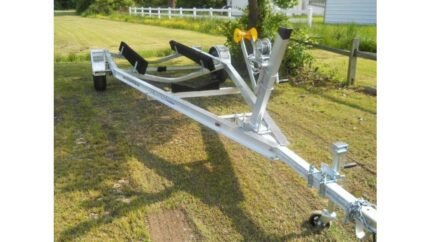
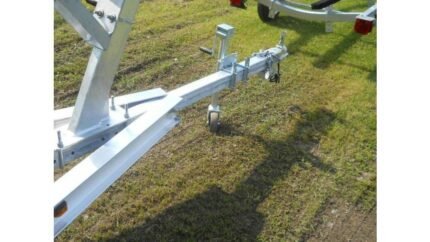
2025 Venture Trailers VAB2625 18′-20′ Boat Trailer for Sale
Original price was: $2,699.00.$2,199.00Current price is: $2,199.00.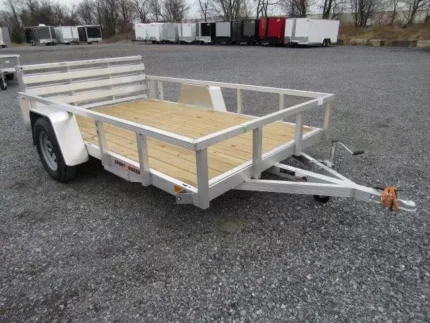
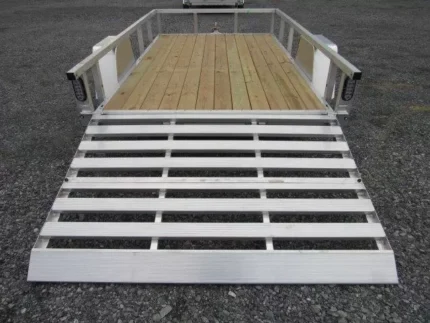
Sport Haven 6×10 Aluminum Utility Trailer
Original price was: $3,899.00.$3,499.00Current price is: $3,499.00.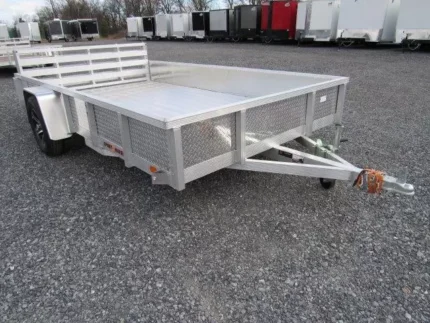
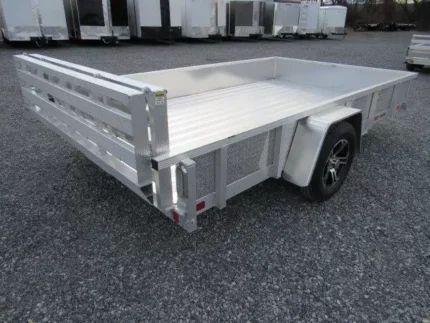
Sport Haven 7×12 Aluminum Utility Trailer
Original price was: $4,799.00.$3,399.00Current price is: $3,399.00.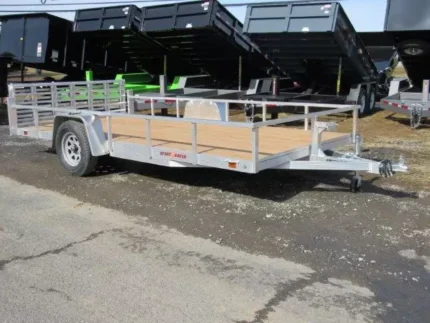
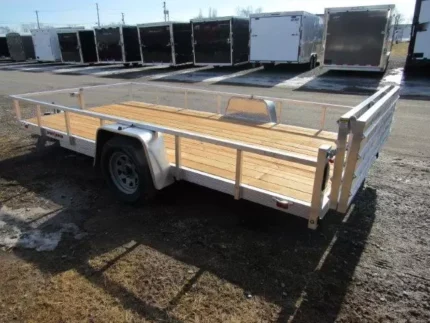
Sport Haven 7×14 Aluminum Utility Trailer Bi-Fold Ramp Gate
Original price was: $3,499.00.$2,700.00Current price is: $2,700.00.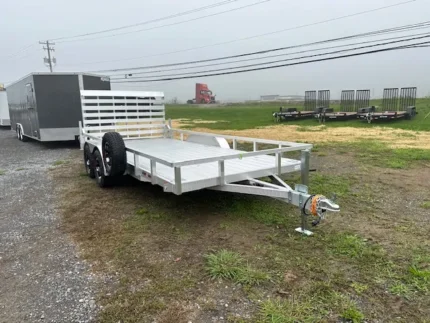
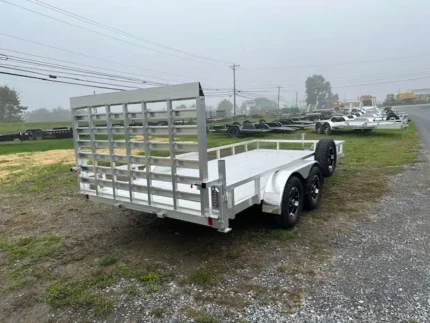
Sport Haven 7×16 Aluminum Landscape Trailer
Original price was: $7,599.00.$6,199.00Current price is: $6,199.00.Aluminum Trailers Built for Work and Recreation
Aluminum trailers provide a practical combination of strength, lower
empty weight and resistance to corrosion. They are used by contractors,
landscapers, homeowners, farmers, property-maintenance companies and
recreational riders who need a dependable open trailer for transporting
equipment, materials and off-road vehicles.
At TrailerWorld, our selection of
aluminum trailers for sale includes aluminum utility
trailers, aluminum landscape trailers and aluminum ATV trailers. These
trailer types can support a wide variety of hauling applications while
reducing the maintenance concerns commonly associated with exposed steel
surfaces.
The best trailer should be selected according to its complete design,
stated GVWR, empty weight, payload capacity, axle ratings, deck size,
ramp capacity and intended cargo. Aluminum construction can reduce
trailer weight, but the trailer must still be used within every
manufacturer rating.
Types of Aluminum Trailers Available
Aluminum Utility Trailers
Aluminum utility trailers are versatile open trailers used for general
hauling. They can transport lawn equipment, building supplies, household
items, landscaping materials, small machinery and recreational vehicles.
Common features may include open side rails, removable rails, stake
pockets, tie-down points, a rear mesh gate or aluminum ramp and either a
single-axle or tandem-axle configuration.
Aluminum utility trailers are popular with homeowners and businesses
because they can handle many different tasks without the added enclosure
of a cargo trailer.
Aluminum Landscape Trailers
Aluminum landscape trailers are designed for transporting lawn-care
equipment, landscaping tools and jobsite supplies. Landscapers commonly
use them to carry zero-turn mowers, walk-behind mowers, spreaders,
trimmers, blowers, fuel containers and related equipment.
These trailers may include tall mesh sides, tool racks, landscape boxes,
trimmer racks, spare-tire mounts and heavy-duty rear gates. The open
design allows crews to load and unload equipment quickly during a busy
workday.
Visit our
landscape trailers for sale
for additional commercial lawn-care and property-maintenance options.
Aluminum ATV Trailers
Aluminum ATV trailers are designed to transport all-terrain vehicles,
side-by-sides, dirt bikes and other recreational equipment. Their lower
empty weight can be useful when towing with properly equipped SUVs,
crossovers and pickup trucks that have limited towing capacity.
ATV trailer designs may include rear loading ramps, side-loading ramps,
removable side rails, multiple tie-down points and open decks that can
accommodate one or more recreational vehicles.
Before purchasing, measure the total length and width of every ATV or
UTV you plan to transport, including accessories such as bumpers, winches
and oversized tires.
Benefits of Aluminum Trailers
Lower Empty Trailer Weight
Aluminum generally weighs less than steel. A lower empty trailer weight
can make towing easier and may leave more of the trailer's rated capacity
available for cargo.
Actual weight savings vary according to trailer size, frame design,
axle configuration and installed accessories. Always compare the listed
empty weight and payload capacity of individual trailers rather than
relying on construction material alone.
Natural Corrosion Resistance
Aluminum does not rust in the same way as untreated steel. This makes it
attractive for buyers who operate in wet climates, coastal regions or
areas where road salt and moisture are common.
Aluminum can still oxidize and should be cleaned and inspected regularly,
especially after exposure to salt, chemicals, fertilizer, mud or other
corrosive materials.
Clean, Professional Appearance
Aluminum trailers have a bright, modern appearance that many commercial
operators value. Landscaping businesses, contractors and recreational
owners may prefer aluminum because it can maintain an attractive finish
with proper cleaning.
Potential Fuel and Towing Benefits
Reducing trailer weight may lower the total combined towing weight.
This can improve acceleration, handling and fuel use in some situations,
although actual results depend on the tow vehicle, cargo weight, speed,
terrain and driving conditions.
Strong Resale Appeal
Well-maintained aluminum trailers can attract buyers looking for a
lightweight and corrosion-resistant trailer. Resale value depends on
condition, brand, specifications, age and local demand.
Aluminum Utility Trailers for Everyday Hauling
Aluminum utility trailers are among the most flexible trailer types
available. They can serve homeowners, small businesses, maintenance
crews and recreational users.
Common uses include:
- Transporting lawn mowers and garden equipment
- Moving furniture and household items
- Hauling lumber and building supplies
- Carrying small tractors and utility vehicles
- Transporting mulch, bagged soil and landscaping supplies
- Moving motorcycles, ATVs and dirt bikes
- Carrying tools and property-maintenance equipment
Single-Axle Aluminum Utility Trailers
Single-axle utility trailers are commonly selected for lighter loads,
residential use and short-distance hauling. Their smaller size can make
them easier to maneuver and store.
Buyers should confirm the axle rating, tire rating and stated payload
before loading mowers, ATVs or building materials.
Tandem-Axle Aluminum Utility Trailers
Tandem-axle aluminum utility trailers use two axles and are often chosen
for heavier equipment and commercial applications. They can provide
additional load capacity and distribute weight across more tires.
Two axles do not automatically make every load safe. The complete GVWR,
axle ratings, tires, brakes and tow vehicle must all be considered.
Aluminum Landscape Trailers for Lawn-Care Businesses
Professional landscapers need trailers that support fast loading,
organized equipment storage and dependable daily use. Aluminum landscape
trailers can reduce empty trailer weight while providing an open design
suited to mowers and lawn-care tools.
Common Landscape Trailer Equipment
- Zero-turn lawn mowers
- Walk-behind mowers
- String trimmers
- Leaf blowers
- Edgers and spreaders
- Pressure washers
- Wheelbarrows and hand tools
- Fuel containers and toolboxes
Landscape Trailer Features to Compare
Compare rear-gate capacity, deck width, deck length, tie-down locations,
side-wall height, tool racks and axle capacity. A properly equipped
landscape trailer can reduce loading time and keep frequently used tools
organized.
Buyers should also consider whether the trailer will need to carry more
than one zero-turn mower. Measure the total equipment footprint and allow
space for safe weight distribution and securement.
Aluminum ATV Trailers for Recreational Vehicles
Aluminum ATV trailers are used by recreational riders, hunters, farmers
and property owners to move ATVs, UTVs, dirt bikes and similar vehicles.
The correct trailer should provide enough deck space and payload for the
vehicle and all installed accessories.
Single ATV Trailers
Compact aluminum trailers may be suitable for transporting one ATV or
motorcycle. These models can be easier to store and tow while still
providing secure tie-down locations.
Multi-ATV Trailers
Longer or wider trailers may allow two or more ATVs to be loaded. Some
designs include side-loading ramps so the vehicles can be positioned
across the deck.
UTV and Side-by-Side Trailers
Side-by-sides are often wider and heavier than standard ATVs. Measure
the vehicle at its widest point and confirm that the ramp, deck and
trailer payload can support it.
Include the weight of aftermarket accessories such as roofs, doors,
winches, plows, spare tires and storage boxes when calculating the load.
Popular Aluminum Trailer Sizes
Aluminum utility, landscape and ATV trailers are offered in a variety of
deck dimensions. The correct size depends on the cargo, towing vehicle,
parking area and intended use.
5-Foot by 8-Foot Aluminum Trailers
A 5-by-8-foot aluminum trailer can work well for light residential
hauling, small lawn equipment, motorcycles and compact ATVs. Its smaller
dimensions make it easier to maneuver and store.
5-Foot by 10-Foot Aluminum Trailers
A 5-by-10-foot trailer provides additional deck length for lawn mowers,
garden equipment and recreational vehicles while remaining relatively
compact.
6-Foot by 12-Foot Aluminum Trailers
A 6-by-12-foot model is a popular multipurpose size for homeowners,
landscapers and ATV owners. It can accommodate many zero-turn mowers,
compact equipment and side-by-sides, depending on weight and dimensions.
7-Foot by 14-Foot Aluminum Trailers
Larger 7-by-14-foot aluminum trailers offer more space for commercial
landscape equipment, multiple recreational vehicles or heavier utility
applications.
7-Foot by 16-Foot Aluminum Trailers
A 7-by-16-foot trailer may be selected by businesses and recreational
users who need additional deck area. The larger dimensions require
careful attention to towing capacity, turning space and load
distribution.
Understanding Aluminum Trailer Weight Ratings
Gross Vehicle Weight Rating
GVWR means Gross Vehicle Weight Rating. It represents the maximum rated
weight of the trailer and everything loaded onto it, according to the
manufacturer's specifications.
Empty Trailer Weight
Empty weight is the weight of the trailer without cargo. One advantage
of aluminum construction is that it may reduce empty weight compared with
a similarly designed steel trailer.
Payload Capacity
Payload capacity is the amount of cargo the trailer is rated to carry.
It is commonly determined by comparing the GVWR with the trailer's empty
weight. Installed accessories can reduce the remaining payload.
Never exceed the trailer, axle, tire, hitch or tow vehicle ratings. The
lowest-rated component limits the safe capacity of the complete towing
combination.
Aluminum Trailer Features to Compare
Deck Construction
Aluminum trailers may have an aluminum deck, treated wood deck or a
combination of materials. Aluminum decking can provide corrosion
resistance, while wood decking may offer traction and easier replacement
when damaged.
Loading Gates and Ramps
Common options include rear mesh gates, solid aluminum ramps, bifold
gates and removable ramps. Verify that the ramp is rated for the heaviest
equipment you intend to load.
Tie-Down Points
Properly rated D-rings, stake pockets or integrated tie-down rails are
essential for securing mowers, ATVs, UTVs and other equipment.
Side Rails
Utility and landscape trailers may include open rails, solid sides or
mesh sides. Higher sides can help contain lightweight materials but do
not increase the trailer's stated weight capacity.
Trailer Brakes
Depending on the trailer weight and jurisdiction, brakes may be required
on one or more axles. Confirm that the trailer brake system is compatible
with your tow vehicle and brake controller.
Spare Tire Mount
A properly mounted spare tire can reduce downtime after a tire failure.
Confirm that the spare matches the trailer's wheel and tire
specifications.
LED Lighting
LED lights provide bright visibility and generally use less power than
traditional incandescent bulbs. Inspect all lights and wiring before
every trip.
Aluminum vs. Steel Trailers
Why Choose Aluminum?
Aluminum trailers are often selected for their lower empty weight,
corrosion resistance and clean appearance. They are especially popular
for recreational vehicles, lawn equipment and general utility hauling.
Why Choose Steel?
Steel trailers are widely available and may offer lower initial pricing
or heavier construction in certain applications. They require proper
coating and maintenance to reduce rust and corrosion.
Which Material Is Better?
Neither material is automatically best for every buyer. The right choice
depends on trailer design, cargo weight, intended use, climate,
maintenance requirements, purchase price and repair options.
Compare the complete trailer specifications rather than choosing based
only on the frame material.
How to Choose the Best Aluminum Trailer
Identify What You Will Carry
Begin by listing the equipment and materials you expect to transport.
Include the weight and dimensions of mowers, ATVs, UTVs, attachments,
tools and cargo.
Measure Your Equipment
Measure the total length, width and height of the equipment. Account for
accessories such as mower decks, bumpers, tool racks, winches and
oversized tires.
Confirm Your Tow Vehicle's Capacity
Review the tow vehicle's towing capacity, payload rating, hitch rating,
axle ratings and Gross Combined Weight Rating. The trailer and cargo
must remain within every applicable limit.
Choose the Correct Axle Configuration
Single-axle trailers can be practical for lighter loads and residential
use. Tandem-axle trailers are commonly selected for heavier equipment,
longer decks and commercial applications.
Check Ramp Angle and Capacity
Equipment with low ground clearance may require a longer gate or lower
loading angle. Confirm the ramp capacity before loading a mower, ATV or
UTV.
Consider Storage and Maneuverability
Larger trailers provide more deck space but require additional parking,
turning and storage room. Select a size that fits both the cargo and the
locations where the trailer will be used.
Safe Aluminum Trailer Loading and Towing
Before towing, inspect the coupler, hitch ball, safety chains, breakaway
cable, tires, wheels, lights, wiring and trailer brakes. Confirm that the
coupler is fully locked and that all cargo is properly secured.
Position cargo so the trailer maintains appropriate tongue weight.
Excessive rear loading can reduce towing stability, while too much
forward weight can overload the hitch or tow vehicle.
Use properly rated straps, chains, binders or other securement devices
suitable for the equipment being transported. Recheck the load after
traveling a short distance and periodically during longer trips.
For additional towing and trailer safety information, review resources
from the
National Highway Traffic Safety Administration
,
the
Federal Motor Carrier Safety Administration
and the
National Association of Trailer Manufacturers
.
Aluminum Trailer Maintenance
Aluminum trailers resist rust, but they still require regular cleaning,
inspection and maintenance. Always follow the trailer and component
manufacturers' service schedules.
- Wash dirt, salt, fertilizer and chemicals from the trailer.
- Inspect the frame, deck, welds and fasteners for damage.
- Check tire pressure and tire condition before every trip.
- Inspect wheel bearings, hubs and lug-nut torque.
- Test trailer brakes, lights and the breakaway system.
- Inspect the coupler, safety chains and electrical connector.
- Lubricate hinges and moving components where recommended.
- Inspect loading gates, ramps and latches for wear.
- Check tie-down points before securing heavy equipment.
Aluminum Trailer Financing
Financing may be available for qualified buyers purchasing aluminum
utility trailers, landscape trailers and ATV trailers. Financing can
allow eligible customers to spread the purchase cost over scheduled
payments.
Approval, interest rates, down payments, repayment periods and required
documents depend on the lender and applicant. Visit our
trailer financing page
to learn more about current options.
Aluminum Trailer Pickup and Delivery
Pickup and trailer delivery assistance may be available depending on
inventory location, trailer size and destination. Delivery costs can
vary according to distance, trailer dimensions, scheduling and transport
requirements.
Visit our
trailer delivery page
or
contact TrailerWorld
with your destination ZIP code and preferred trailer to request current
transport information.
Explore Related Trailer Categories
Compare additional trailers for commercial work, equipment hauling,
landscaping and general transportation:
Frequently Asked Questions About Aluminum Trailers
What types of aluminum trailers does TrailerWorld offer?
The aluminum trailer category includes aluminum utility trailers,
aluminum landscape trailers and aluminum ATV trailers. Availability,
sizes and specifications vary according to current inventory.
Are aluminum trailers lighter than steel trailers?
Aluminum trailers are generally lighter than similarly designed steel
trailers. Actual weight differences depend on the frame, deck, axles,
size and installed accessories.
Do aluminum trailers rust?
Aluminum does not rust like untreated steel, but it can oxidize and may
be damaged by salt, chemicals or improper maintenance. Regular cleaning
and inspection are still important.
Are aluminum trailers strong enough for commercial use?
Properly engineered aluminum trailers can be suitable for commercial
landscaping, utility hauling and equipment transportation. Buyers should
select a trailer based on its stated ratings and construction rather
than material alone.
Can an aluminum utility trailer carry a lawn mower?
Many aluminum utility trailers can transport lawn mowers and similar
equipment. Confirm the mower's weight and dimensions as well as the
trailer's payload, deck size and ramp rating.
Can an aluminum trailer carry an ATV or UTV?
Yes, many aluminum trailers are designed for ATVs and UTVs. Measure the
recreational vehicle and confirm the trailer's deck dimensions, payload
capacity, ramp rating and tie-down points.
Should I choose a single-axle or tandem-axle aluminum trailer?
Single-axle trailers can work well for lighter loads and compact
applications. Tandem-axle trailers are commonly selected for heavier
equipment, commercial work and larger deck sizes.
What size aluminum trailer do I need?
Select a trailer that safely accommodates the total dimensions and
weight of your cargo. Also consider towing capacity, storage space,
turning room and the type of loading gate required.
How should equipment be secured on an aluminum trailer?
Use properly rated straps, chains, binders or other securement devices
attached to suitable tie-down points. Follow equipment, trailer and
cargo-securement requirements.
Can I finance an aluminum trailer?
Financing options may be available to qualified buyers. Approval, rates,
down payments and repayment terms depend on the lender and applicant.
Does TrailerWorld deliver aluminum trailers?
Pickup and delivery options may be available depending on the trailer
and destination. Contact TrailerWorld with the preferred trailer and
destination ZIP code to request current delivery information.
Shop Aluminum Trailers at TrailerWorld
TrailerWorld helps homeowners, landscapers, businesses and recreational
riders compare aluminum utility trailers, aluminum landscape trailers
and aluminum ATV trailers. Browse the current inventory displayed above
and review each trailer's size, GVWR, payload, axle configuration, ramp
design and available features.
For help comparing trailer sizes, towing requirements, financing and
delivery options,
contact TrailerWorld
today.