


Heavy-Duty Dump Trailers for Sale
Shop dependable dump trailers for sale at TrailerWorld.
Our inventory includes hydraulic dump trailers, tandem-axle models,
low-profile dump trailers, deckover configurations and heavy-duty options
built for construction, landscaping, agriculture, property maintenance and
commercial hauling.
A quality dump trailer helps you transport and unload gravel, soil, mulch,
firewood, roofing material, brush, demolition debris and other bulk
materials more efficiently. Instead of unloading by hand, the hydraulic
lifting system raises the trailer bed and allows the material to discharge
through the rear gate.
Browse the available dump trailers below and compare trailer dimensions,
gross vehicle weight ratings, payload capacities, axle configurations,
side-wall heights, hitch types and hydraulic systems.
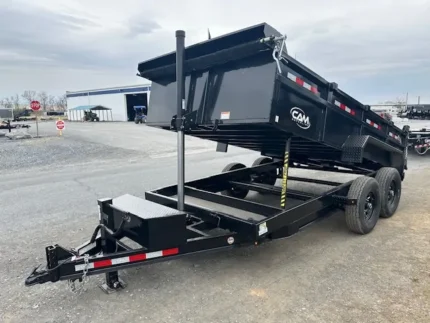
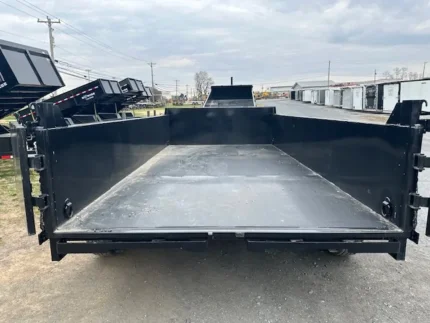
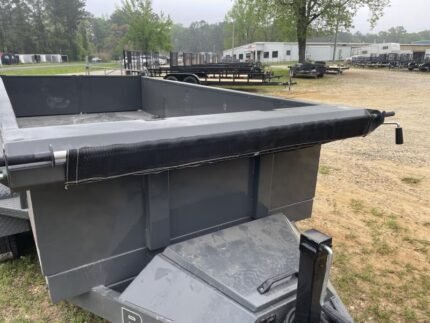
2024 CAM Superline 7×14 Low Profile Dump Trailer 14K Telescopic Lift
Original price was: $12,999.00.$10,499.00Current price is: $10,499.00.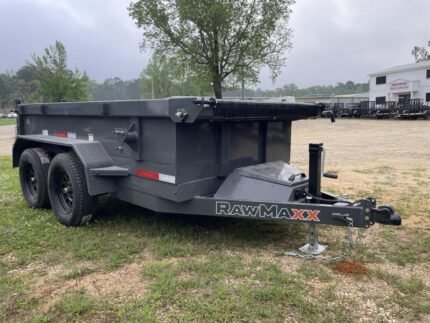
2025 RawMaxx SDX 5×10 Mini Dump Trailer
Original price was: $5,500.00.$4,200.00Current price is: $4,200.00.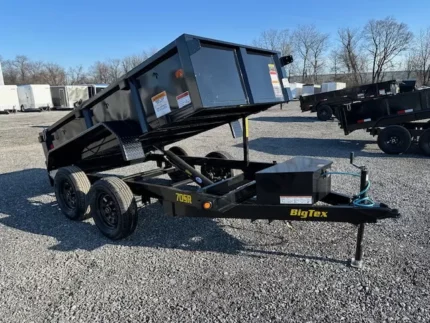
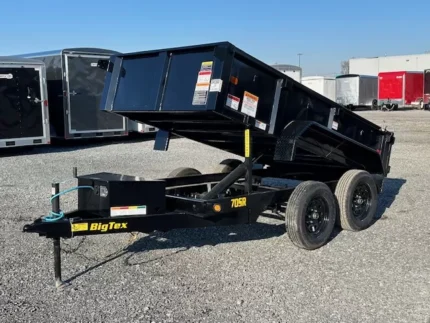
Big Tex 5×10 Low Profile Dump Trailer with Barn Doors
Original price was: $7,499.00.$6,499.00Current price is: $6,499.00.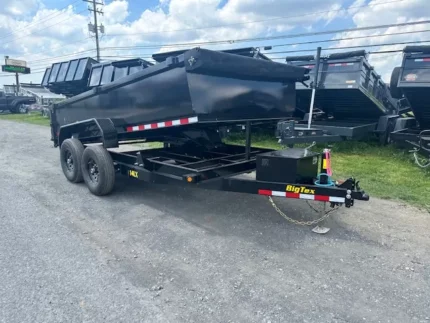
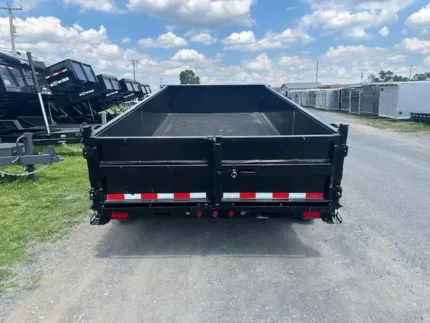
Big Tex 7×14 14LX Channel Frame Dump Trailer 14K
Original price was: $10,499.00.$9,999.00Current price is: $9,999.00.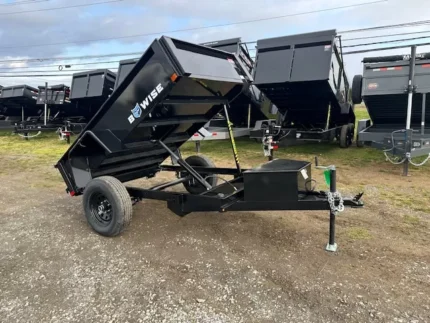
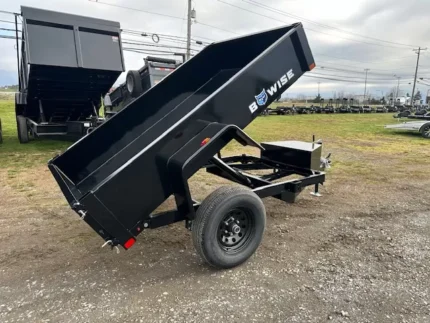
BWise 5×8 Dump Trailer 5K Spreader Gate for Sale
Original price was: $5,199.00.$4,199.00Current price is: $4,199.00.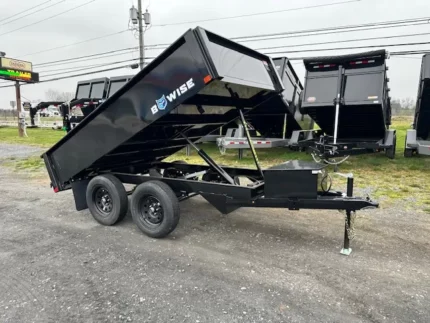
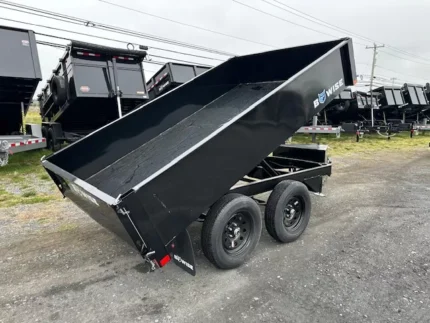
BWise 6×10 Deckover Dump Trailer 7K Spreader Gate
Original price was: $6,699.00.$6,099.00Current price is: $6,099.00.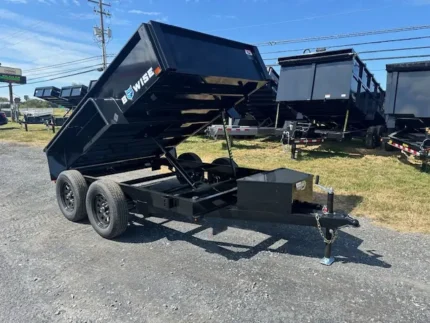
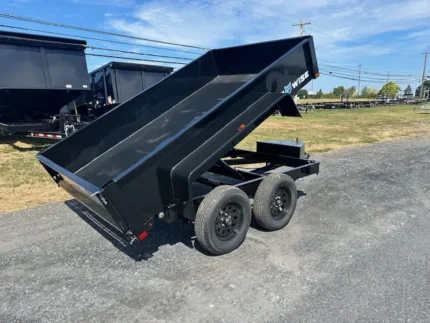
BWise 6×10 Dump Trailer 7K Spreader Gate
Original price was: $6,899.00.$5,699.00Current price is: $5,699.00.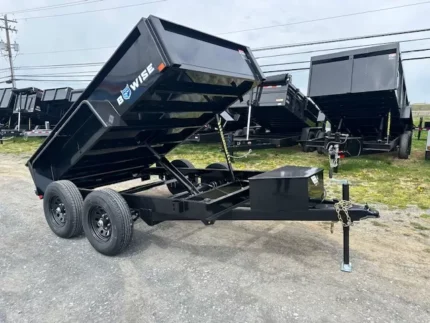
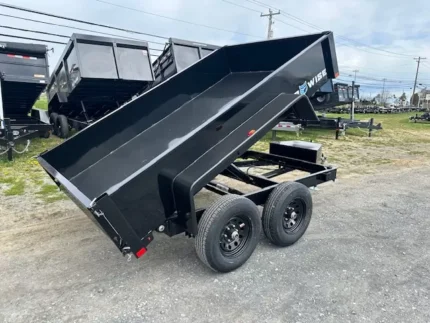
BWise 6×10 Low Profile Dump Trailer – 10K Spreader Gate
Original price was: $7,799.00.$6,899.00Current price is: $6,899.00.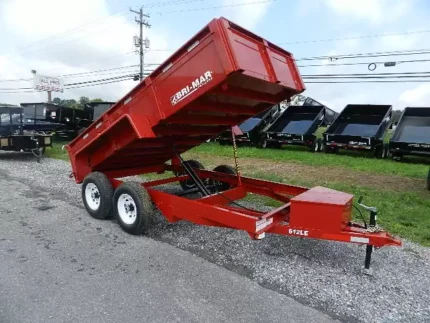
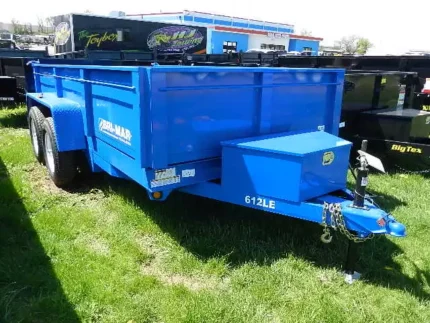
BWise 6×12 Dump Trailer 10K Spreader Gate for Sale
Original price was: $8,999.00.$7,899.00Current price is: $7,899.00.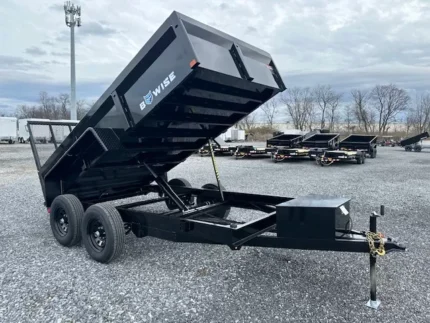
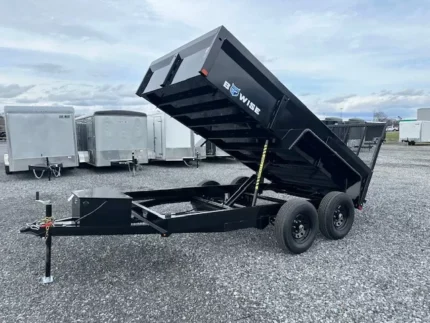
BWise 6×12 Dump Trailer Landscape Ramp for Sale
Original price was: $9,499.00.$8,499.00Current price is: $8,499.00.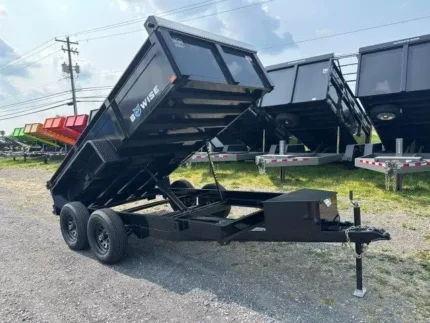
BWise 6×12 Low Profile Dump Trailer 10K with Tarp Kit & Ramps
Original price was: $10,299.00.$9,299.00Current price is: $9,299.00.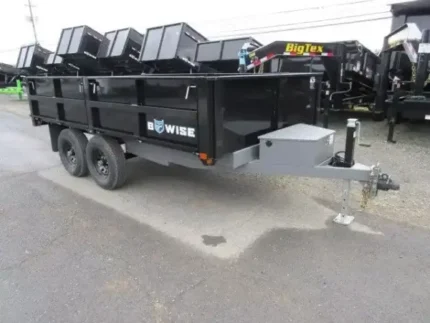
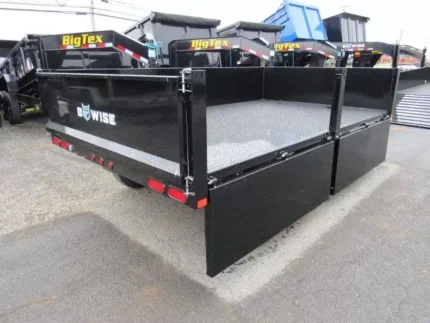
BWise 7 x 12 Deckover Dump Trailer – Fold Down Sides
Original price was: $8,999.00.$7,199.00Current price is: $7,199.00.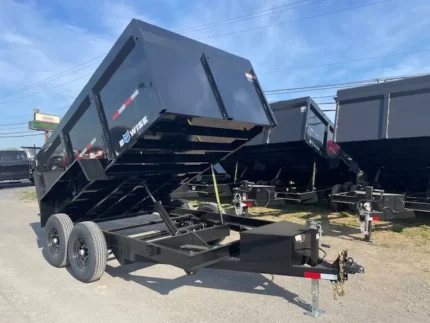
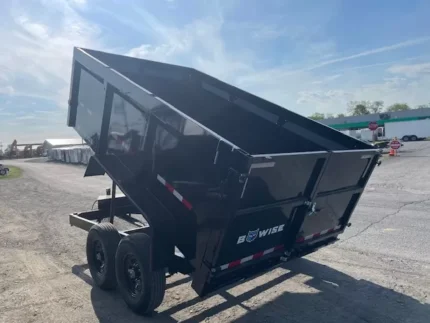
BWise 7 x 12 High Side Dump Trailer Barn Doors
Original price was: $11,999.00.$10,999.00Current price is: $10,999.00.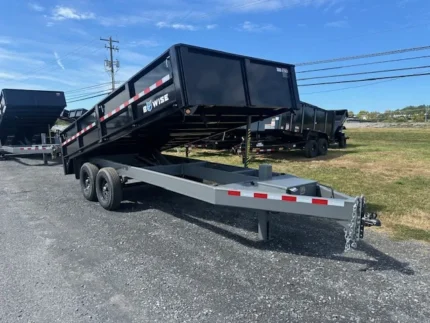
BWise 7 x 16 Deckover Dump Trailer – Fold Down Sides
Original price was: $16,599.00.$14,599.00Current price is: $14,599.00.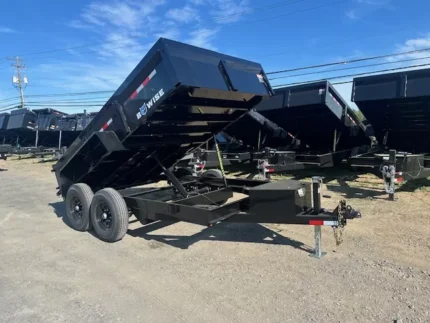
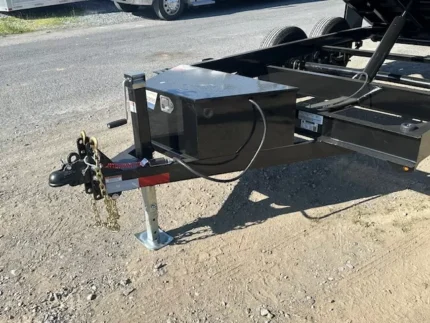
BWise 7×12 Low Profile Dump Trailer 12K with Ladder Ramps
Original price was: $10,299.00.$9,599.00Current price is: $9,599.00.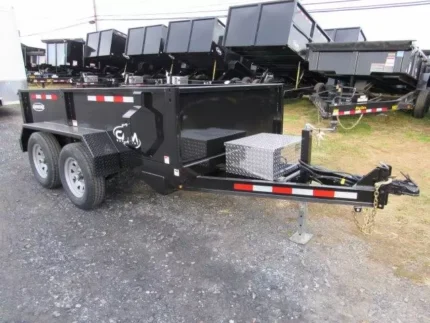
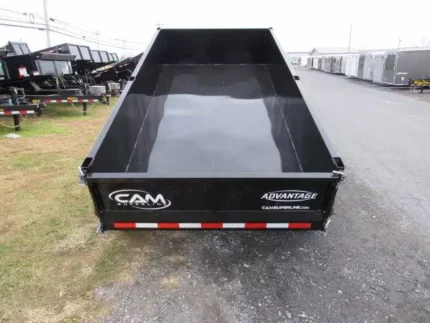
CAM Superline 5×10 Dump Trailer – Advantage Series 7K
Original price was: $7,499.00.$6,899.00Current price is: $6,899.00.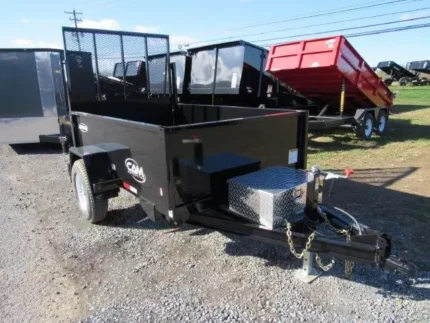
CAM Superline 5×8 Dump Trailer 5K Landscape Gate
Original price was: $6,499.00.$5,799.00Current price is: $5,799.00.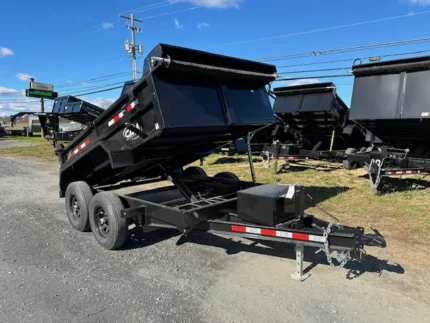
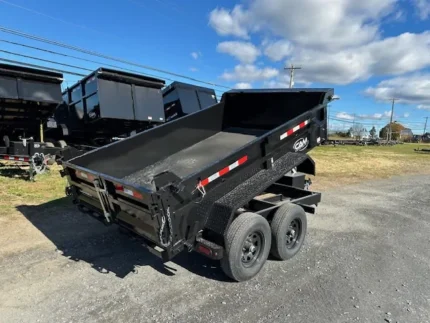
CAM Superline 6×10 Dump Trailer 10K with Ramps
Original price was: $9,999.00.$8,999.00Current price is: $8,999.00.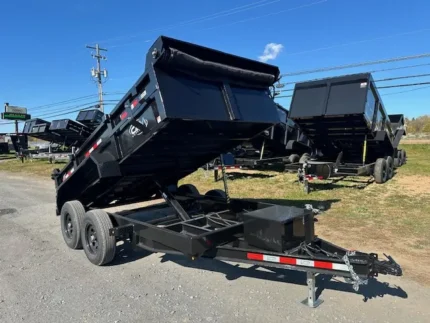
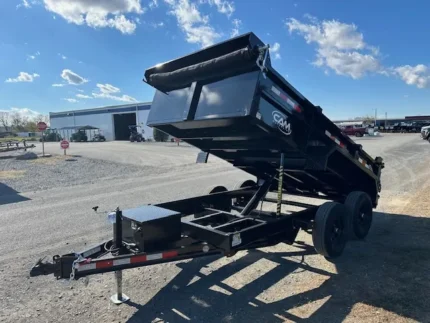
CAM Superline 6×12 Dump Trailer with Ladder Ramps
Original price was: $10,499.00.$9,999.00Current price is: $9,999.00.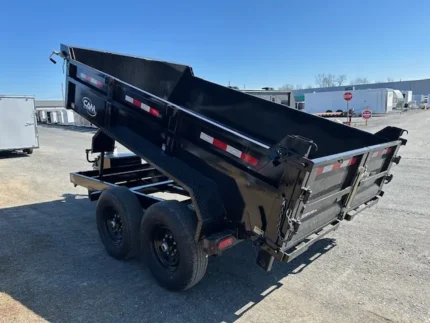
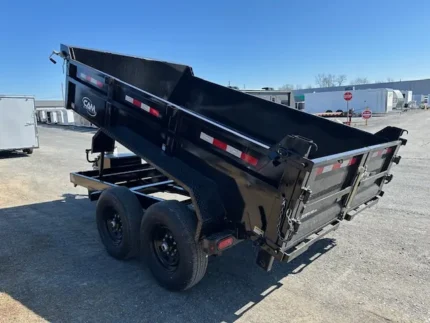
CAM Superline 7×12 HD Low Profile Dump Trailer with Scissor Lift
Original price was: $11,499.00.$10,699.00Current price is: $10,699.00.Find the Right Dump Trailer for Your Work
Choosing the right dump trailer requires more than selecting a bed size.
The trailer must match your tow vehicle, typical cargo, working
conditions and expected hauling frequency. A properly selected trailer
can improve productivity while helping reduce unnecessary trips,
overloading and difficult unloading.
TrailerWorld offers information and purchasing assistance for customers
looking for residential, agricultural and commercial
dump trailers for sale. Whether you need a compact
trailer for property cleanup or a heavy-duty model for construction and
equipment transport, compare the complete specifications before making
your decision.
Important details include the trailer's gross vehicle weight rating,
empty weight, stated payload capacity, axle ratings, tire ratings, frame
construction, floor thickness, hydraulic hoist design and hitch
configuration.
Types of Dump Trailers Available
Low-Profile Dump Trailers
Low-profile dump trailers position the trailer bed between the wheels.
This creates a lower deck height and can make loading equipment, debris
and bulk materials easier. The lower center of gravity may also provide
practical handling advantages when the trailer is correctly loaded.
These trailers are popular with landscapers, roofers, property
maintenance companies and contractors who frequently work in areas where
loading height and maneuverability are important.
Deckover Dump Trailers
A deckover dump trailer places the cargo bed above the wheels. Because
the wheel wells do not extend into the cargo area, the trailer can offer
a wider and more open bed. This configuration is useful when hauling
pallets, equipment, branches and bulky material.
Deckover trailers generally have a higher loading height than
low-profile models, so buyers should consider how material and equipment
will be loaded.
Tandem-Axle Dump Trailers
Tandem-axle dump trailers use two axles and are common for construction,
landscaping and commercial hauling. The additional axle can support
higher trailer ratings and distribute the load across more tires.
Buyers should confirm the individual axle ratings, brake configuration,
suspension type, tire capacity and total trailer GVWR. Two axles do not
automatically mean that every heavy load is safe.
Gooseneck Dump Trailers
Gooseneck dump trailers connect to a hitch installed in the bed of a
properly equipped pickup truck. They are often selected for larger
trailers, heavier workloads and commercial applications where load
distribution and towing stability are major priorities.
Explore our
gooseneck trailers for sale
for additional heavy-duty hauling options.
Commercial Dump Trailers
Commercial dump trailers are designed for demanding and frequent use.
Depending on the model, they may include reinforced frames, thicker
floors, higher-capacity axles, scissor-hoist systems, heavy-duty rear
gates, tarp systems and equipment ramps.
Contractors should select a model based on the heaviest expected load,
not only the average daily load. This helps account for dense materials
such as gravel, wet soil, concrete debris and roofing waste.
Popular Dump Trailer Sizes
Dump trailers are available in many lengths, widths and side-wall
heights. The best size depends on the work being performed, the tow
vehicle's ratings and the space available at each jobsite.
5-Foot by 10-Foot Dump Trailers
A 5-by-10-foot model can work well for residential cleanup, light
landscaping, firewood, yard waste and property maintenance. Its compact
dimensions can make it easier to use in narrow driveways and smaller
worksites.
6-Foot by 12-Foot Dump Trailers
A 6-by-12-foot dump trailer provides more bed space while remaining
manageable for many small businesses and property owners. It is commonly
considered for mulch, roofing debris, renovation waste and landscaping
supplies.
7-Foot by 14-Foot Dump Trailers
The 7-by-14-foot configuration is popular among contractors,
landscapers and commercial operators. It can provide a practical balance
between cargo volume, equipment space and maneuverability.
7-Foot by 16-Foot Dump Trailers
Larger 7-by-16-foot models may be suited to commercial hauling, farm
operations and high-volume projects. Their increased dimensions require
careful attention to payload, towing capacity and jobsite access.
Trailer dimensions alone do not determine capacity. Dense material can
exceed the trailer's weight limit before the bed appears full. Always
calculate the expected load weight before towing.
Understanding Dump Trailer Weight Ratings
What Is GVWR?
GVWR means Gross Vehicle Weight Rating. It represents the maximum rated
weight of the trailer and everything loaded into or onto it, subject to
the manufacturer's specifications.
GVWR is not the same as payload capacity. The trailer itself has weight,
and that empty weight must be considered when determining how much cargo
can be transported.
Payload Capacity
Payload capacity is the amount of cargo the trailer is rated to carry.
It is commonly determined by comparing the GVWR with the trailer's empty
weight. Accessories, spare tires, ramps and other installed equipment can
reduce the remaining payload.
Never exceed the rating of the trailer, tow vehicle, hitch, tires, axles
or related towing components. The lowest-rated component can limit the
safe capacity of the complete combination.
Dump Trailer Hydraulic Systems
The hydraulic system raises the trailer bed and allows the cargo to be
unloaded. Electric-over-hydraulic systems commonly use an onboard
battery to power the hydraulic pump.
Scissor-Hoist Systems
A scissor hoist uses a hinged lifting mechanism beneath the bed. The
design distributes lifting force through the hoist structure and is
commonly used on heavy-duty dump trailers.
Telescopic Hydraulic Cylinders
Telescopic cylinders extend through multiple stages as the bed rises.
Depending on the trailer design, the cylinder may be mounted near the
front of the bed and can provide a steep dumping angle.
Hydraulic Battery Maintenance
The hydraulic battery must remain adequately charged. Regularly inspect
the battery terminals, wiring, hydraulic pump, hoses, fittings, fluid
level and charging system according to the manufacturer's instructions.
Buyers should ask whether the trailer includes a charge line, onboard
charger, solar maintainer or another battery-charging system.
Important Dump Trailer Features
Rear Gate Configuration
Common rear-gate designs include barn doors, spreader gates and
combination gates. A spreader gate can help control the release of loose
material, while barn doors provide wider access for loading equipment and
bulky cargo.
Equipment Ramps
Some dump trailers include integrated or removable equipment ramps.
Confirm that the ramps, floor and trailer are rated for the equipment you
intend to load. Equipment should also be positioned and secured
correctly.
Tarp Systems
A fitted tarp helps contain loose material during transport. Manual and
powered tarp systems may be available. Local cargo-securement rules may
require loads to be covered or otherwise contained.
Stake Pockets and Side Extensions
Stake pockets can support removable side extensions for brush, branches
and other lightweight bulky material. Taller sides increase cargo volume,
but they do not increase the trailer's stated weight capacity.
Tie-Down Points
Properly rated tie-down points are important when transporting compact
equipment or cargo that must be secured. Confirm the location and rating
of each tie-down before loading equipment.
Trailer Brakes
Dump trailers commonly use electric brakes on one or more axles.
Requirements vary according to trailer weight and jurisdiction. Confirm
that the tow vehicle has the appropriate brake controller and that all
braking components operate correctly.
Steel vs. Aluminum Dump Trailers
Steel Dump Trailers
Steel is commonly used for dump trailer frames, floors and side walls
because it offers strength, durability and broad availability. Steel
trailers are popular in construction, demolition, landscaping and other
demanding work environments.
Buyers should examine the frame design, floor thickness, crossmember
spacing, weld quality, surface preparation and protective finish.
Aluminum Dump Trailers
Aluminum trailers can offer lower empty weight and strong resistance to
corrosion. The lower trailer weight may leave more capacity available
for cargo when all ratings and specifications are considered.
The best choice depends on construction quality, intended material,
workload, repair requirements, price and operating environment. Explore
our
aluminum trailers for sale
for additional lightweight hauling options.
Dump Trailers for Construction
Construction companies use dump trailers for demolition debris, roofing
material, lumber scraps, dirt, gravel and site cleanup. Contractors may
also use properly rated models to transport compact equipment.
Buyers working on demanding jobs should consider higher-capacity axles,
reinforced floors, heavy-duty hoists, secure tarp systems and durable
rear-gate hardware.
Visit our
contractor trailers
and
equipment trailers
for additional worksite hauling solutions.
Dump Trailers for Landscaping
Landscaping companies use dump trailers to haul mulch, soil, gravel,
sod, branches, leaves and jobsite debris. A hydraulic bed can save time
when materials must be unloaded at several locations during the day.
Landscapers should consider trailer size, side-wall height, tarp design,
equipment ramps and the amount of turning space available at residential
properties.
You can also browse our
landscape trailers for sale
for transporting mowers, lawn-care equipment and landscaping tools.
Dump Trailers for Farms and Rural Properties
Farms and rural property owners can use dump trailers to transport
firewood, fencing supplies, feed, soil, brush and maintenance equipment.
Larger gooseneck configurations may suit buyers who regularly handle
heavier or higher-volume loads.
Before purchasing, confirm that the tow vehicle, hitch, trailer brakes
and electrical connections are suitable for the selected trailer.
How to Choose the Best Dump Trailer
Identify What You Will Haul
Start by listing the materials and equipment you expect to transport.
Gravel, sand and wet soil are much heavier than leaves, brush and mulch.
The weight of the cargo is often more important than its visible volume.
Confirm Your Tow Vehicle's Ratings
Review the tow vehicle's towing capacity, gross vehicle weight rating,
gross combined weight rating, payload rating, axle ratings and hitch
specifications. The trailer should be selected according to the complete
towing combination.
Consider the Worksite
Think about driveway width, turning space, ground clearance, terrain,
unloading location and overhead clearance. A larger trailer may increase
hauling capacity but can be difficult to maneuver in confined areas.
Choose the Correct Hitch Type
Bumper-pull dump trailers can work well for many residential and
commercial applications. Gooseneck trailers are often considered for
larger configurations and heavier workloads. The correct hitch type
depends on your truck, installed hitch and hauling requirements.
Review Warranty and Parts Availability
Ask about the trailer warranty, hydraulic component warranty, axle
coverage and the availability of replacement parts. Warranty terms differ
among manufacturers and individual components.
Dump Trailer Financing Options
A dump trailer can be an important investment for contractors,
landscapers, farms, rental companies and property-maintenance businesses.
Financing may allow qualified buyers to spread the purchase cost over
scheduled payments.
Approval, rates, down payments, repayment terms and documentation
requirements depend on the lender and applicant. Visit our
trailer financing page
for more information about available programs.
Dump Trailer Pickup and Delivery
Pickup and transportation options may be available depending on the
trailer, its location and the buyer's destination. Delivery pricing can
depend on distance, trailer dimensions, weight, scheduling and transport
requirements.
Visit our
trailer delivery page
or
contact TrailerWorld
with your ZIP code and preferred trailer to request current delivery
information.
Dump Trailer Maintenance
Routine maintenance can help protect the trailer and reduce unexpected
downtime. Always follow the maintenance schedule supplied by the trailer
and component manufacturers.
- Inspect tire condition and tire pressure before towing.
- Check wheel bearings, hubs and lug-nut torque regularly.
- Test trailer brakes, lights and the breakaway system.
- Inspect the coupler, hitch, safety chains and electrical plug.
- Check hydraulic hoses, fittings, cylinders and fluid levels.
- Keep the hydraulic battery charged and terminals clean.
- Inspect the floor, frame, welds and rear-gate hardware.
- Clean corrosive material from the trailer after use.
- Touch up damaged protective coating where appropriate.
Safe Dump Trailer Loading and Towing
Before towing, verify that the coupler is locked, safety chains are
connected, the breakaway cable is attached, tires are properly inflated,
lights operate and the load is contained and secured.
Load the trailer evenly and maintain appropriate tongue weight according
to the manufacturer's instructions. Avoid concentrating excessive weight
at the rear or on one side of the trailer.
Before raising the dump bed, park on stable and appropriately level
ground. Confirm adequate overhead clearance and keep people away from the
trailer. Never work beneath a raised bed unless the manufacturer's
approved body prop or safety procedure is correctly engaged.
Review official trailer and towing information from the
National Highway Traffic Safety Administration
,
the
Federal Motor Carrier Safety Administration
and the
National Association of Trailer Manufacturers
.
Explore More Trailer Categories
TrailerWorld carries trailer configurations for commercial work,
equipment transportation, vehicles, tools and general cargo. Explore
these related categories:
Frequently Asked Questions About Dump Trailers
What size dump trailer do I need?
The right size depends on the cargo you haul, the weight of your typical
load, your tow vehicle's ratings and available jobsite space. Compact
models can work well for property maintenance, while 7-by-14-foot and
larger configurations are often considered for construction,
landscaping and commercial hauling.
How much weight can a dump trailer carry?
Capacity varies by trailer. Review the stated GVWR, empty weight and
payload capacity. Installed accessories can reduce the available
payload. Never exceed the ratings of the trailer, axles, tires, hitch or
tow vehicle.
What does GVWR mean?
GVWR means Gross Vehicle Weight Rating. It is the maximum rated weight of
the trailer and everything loaded into or onto it, according to the
manufacturer's specifications.
What is the difference between a low-profile and deckover dump trailer?
A low-profile trailer carries the bed between the wheels, creating a
lower loading height. A deckover trailer places the bed above the wheels,
creating a wider and more open cargo floor.
Can a dump trailer carry a skid steer?
Some models can transport compatible compact equipment, but not every
dump trailer is suitable. Confirm the trailer payload, floor rating, ramp
rating, axle capacity, tie-down locations, load distribution and tow
vehicle ratings.
Do dump trailers have hydraulic systems?
Most modern dump trailers use an electric-over-hydraulic system to raise
the bed. The system generally includes a battery, electric pump,
hydraulic reservoir, hoses and one or more lifting cylinders.
How often should a dump trailer be serviced?
Follow the manufacturer's maintenance schedule. Tires, brakes, bearings,
hydraulic components, lights, battery, coupler, safety chains and the
breakaway system should be inspected regularly.
Do I need a CDL to tow a dump trailer?
CDL requirements depend on the vehicle ratings, trailer rating,
commercial use, cargo and applicable federal and state laws. Confirm the
requirements with the licensing and transportation authorities in the
states where the trailer will be operated.
Can I finance a dump trailer?
Financing may be available to qualified buyers. Approval, rates, down
payment requirements and repayment terms depend on the lender and
applicant.
Does TrailerWorld deliver dump trailers?
Pickup and delivery options may be available depending on the trailer and
destination. Contact TrailerWorld with the trailer model and your ZIP
code to request current delivery information.
Shop Dump Trailers at TrailerWorld
TrailerWorld helps buyers compare durable trailers for construction,
landscaping, agricultural, property-maintenance and commercial hauling
applications. Browse the dump trailer inventory displayed above and
review the specifications of each available model.
For help comparing sizes, payload ratings, axle configurations,
hydraulic systems, financing and delivery, please
contact TrailerWorld
.